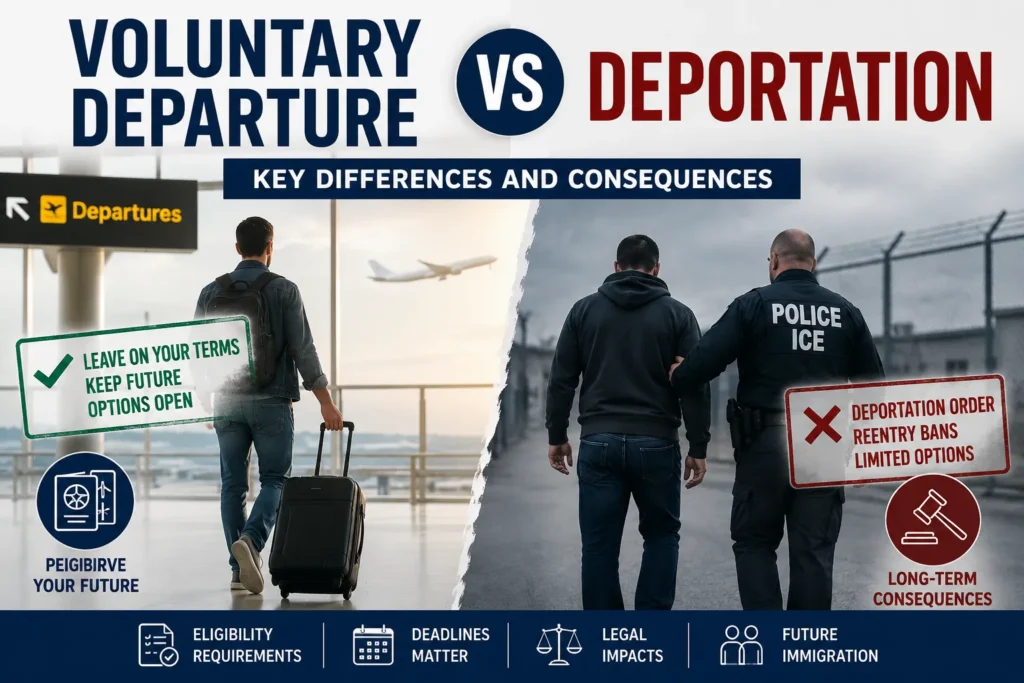
Facing immigration court is scary. One of the biggest decisions is understanding voluntary departure vs deportation. These two options lead to completely different futures. Voluntary departure lets someone leave America on their own terms and pay their own way. Deportation means the government forces you out. Knowing voluntary departure vs deportation can save a person’s chance to ever come back legally.
What Is Voluntary Departure Immigration?
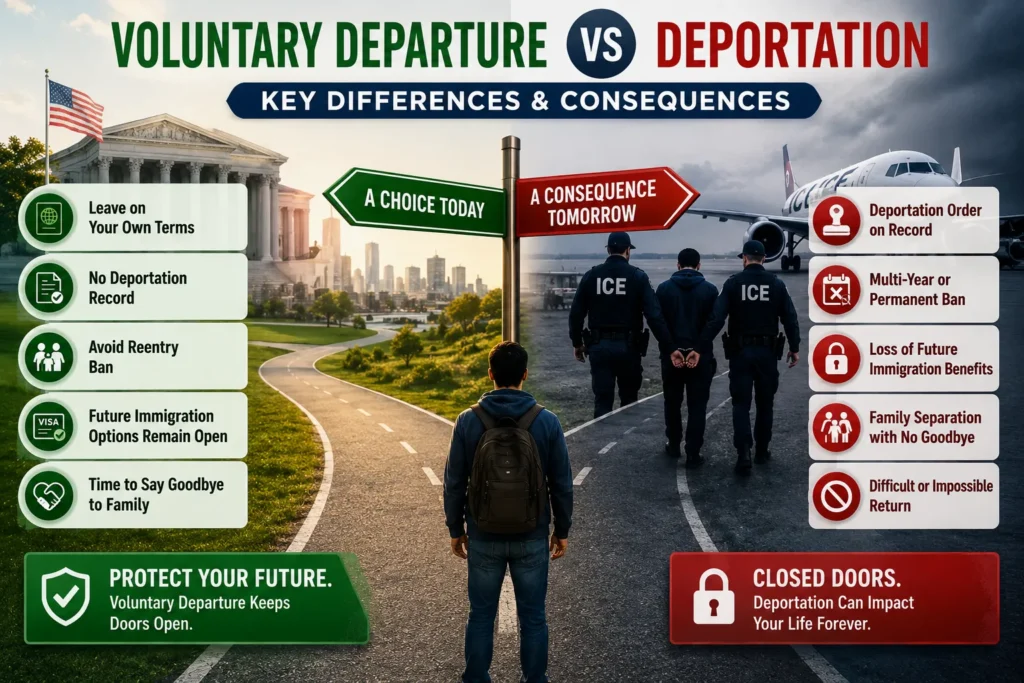
Voluntary departure immigration is a privilege, not a right. It allows certain non-citizens to leave the country without a deportation order on their record. The judge grants this to people with good moral character who can pay for their own travel. Here is what voluntary departure gives you:
– No deportation stamp on your file
– No automatic multi year reentry ban
– Time to say goodbye to family
– Ability to apply for visas later
– Must leave within 60 to 120 days
Harsh Deportation Consequences
Deportation consequences hurt for years, sometimes forever. A deportation order triggers automatic bars. The shortest ban is five years. Serious crimes or multiple illegal entries lead to ten years, twenty years, or a permanent ban. Deportation consequences also include:
– No way to adjust status later
– Possible criminal charges for coming back
– Loss of all pending immigration applications
– Family separation with no goodbye
– Other countries may deny entry too
Meeting Voluntary Departure Requirements
Voluntary departure requirements are strict. The judge does not hand these out easily. Here is what an applicant must show:
– No aggravated felony conviction
– Not a threat to national security
– Waive appeal rights in most cases
– Have a valid passport ready
– Show a plane ticket and travel plan
– Leave exactly on time without any delay
Miss any of these voluntary departure requirements and the judge converts the grant into a deportation order immediately. All the harsh deportation consequences then kick in.
Understanding Removal Proceedings Immigration
Removal proceedings immigration starts when the government files a Notice to Appear. That document lists why the person should be removed. From there, the individual can fight the case, accept removal, or request voluntary departure.
During removal proceedings immigration, the judge explains voluntary departure vs deportation clearly. The best time to ask for voluntary departure is early. Late requests often get denied because the judge thinks the person is stalling.
What Is Self Deportation?
Self deportation means leaving on your own without asking the judge for voluntary departure. This is very risky. There is no official record of a permitted departure. Immigration may treat it as an unexcused absence.
Self deportation does not stop a deportation order if the person missed a court date. Unlike real voluntary departure immigration benefits, self deportation offers no protection. Future visa applications become extremely difficult. Do not confuse self deportation with voluntary departure approved by a judge.
How to Request Voluntary Departure
Requesting voluntary departure must happen before a final deportation order. The person or their lawyer asks the immigration court in writing. Here is what to do:
– File Form EOIR-42A if no final order yet
– Provide proof of a passport and flight plans
– Show you have money to pay for travel
– Post a bond if the judge requires it
– Leave by the deadline no matter what
Overstay even one day past the deadline and the voluntary departure turns into a deportation order. The government also adds a fine up to three thousand dollars.
What People Get Wrong
Many people think voluntary departure means the case is dismissed. That is false. Voluntary departure is still a departure. It does not grant any status. It simply avoids the deportation stamp. Another common myth is that voluntary departure immigration benefits are available to everyone in court. Criminals and security threats cannot get it. People also think they can change their mind after being granted. The judge warns that the decision is final. Changing plans after the deadline brings a deportation order with no new hearing.
Which One Is Better?
The answer to voluntary departure vs deportation is clear. Voluntary departure is always better if someone has to leave. Future immigration options may remain open, a formal deportation record can often be avoided, and individuals may have time to say goodbye to family and friends before leaving. Deportation closes doors permanently. The only downside to voluntary departure is paying for travel. But that small cost is nothing compared to losing the ability to ever return to America.
Frequently Asked Questions
Can someone ask for voluntary departure after deportation proceedings have already started?
Yes, a person can request voluntary departure at any point during removal proceedings as long as the immigration judge has not yet issued a final deportation order.
How many days does a judge typically give someone to leave under voluntary departure?
Judges usually grant either 60 days or 120 days to leave, with the longer period often given to those who post a bond and show full cooperation.
Does voluntary departure erase the time a person spent in the US without papers?
No, voluntary departure does not erase past unlawful presence, so any days spent without legal status still count toward a future reentry bar.
What happens if someone misses their voluntary departure deadline by just one day?
Missing the deadline by even one day automatically turns the voluntary departure into a deportation order and adds a fine up to three thousand dollars.
Can a person with a criminal record qualify for voluntary departure immigration benefits?
Someone with an aggravated felony cannot get voluntary departure, but people with minor non aggravated misdemeanors may still qualify if they show good moral character.
Is voluntary departure available to people who crossed the border without inspection?
Yes, people who entered without inspection can request voluntary departure during removal proceedings as long as they meet all other requirements like having a valid passport.
How does deportation affect travel to countries other than the United States?
Deportation from the US enters international databases, so countries like Canada, the United Kingdom, and Australia can see that record and deny entry.
Do children in immigration court have access to voluntary departure like adults do?
Yes, unaccompanied minors and children in removal proceedings can request voluntary departure, and judges often apply special protections and more flexible deadlines.
Which option keeps the door open for coming back to America in the future?
Voluntary departure keeps the door open because it leaves no deportation stamp on the record, while deportation slams the door with automatic multi year or permanent bans.