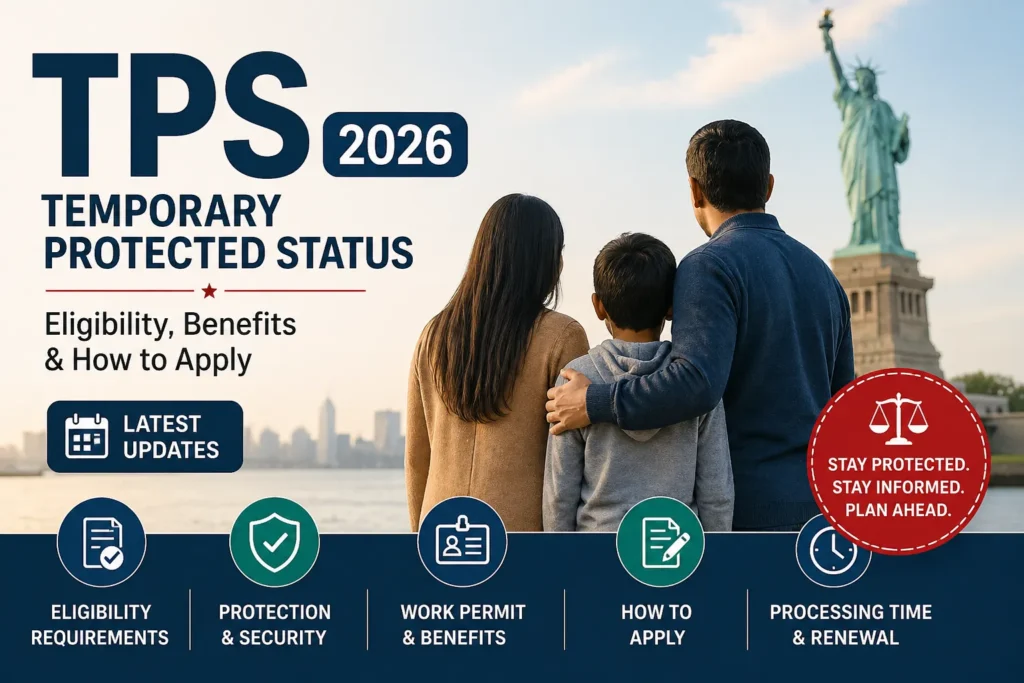
Temporary protected status is something people don’t usually think about until they need it. And when they do, the questions come fast. What is it? Can it help? Is it reliable?
Here’s the simple way to look at it. When going back home is not safe, temporary protected status gives people a way to stay, work, and live without constant fear. It’s not permanent, but it gives time. And in uncertain situations, time matters.
What is Temporary Protected Status?
Temporary protected status is a program that allows people from certain countries to stay in the United States when their home country is dealing with serious problems.
Picture this:
- A country is in conflict
- A natural disaster destroys infrastructure
- The government situation becomes unstable
In these situations, the temporary protected status program steps in and allows people to remain in the U.S. for a limited time.
It’s not about long-term promises. It’s about immediate protection.
Why People Are Talking About TPS in 2026
Right now, more people are paying attention to temporary protected status, and it’s not by accident.
The world has been unpredictable. More countries are facing challenges, and more people are looking for safety.
At the same time:
- Governments are reviewing decisions more often
- Policies are changing faster
- Legal challenges are increasing
The haiti tps lawsuit is a good example of how decisions can shift and affect thousands of people.
Who Can Apply? TPS Eligibility Requirements
This is where things become important. Not everyone qualifies for temporary protected status.
Basic Requirements
- You must be from a designated country
- You must already be living in the U.S.
- You must show continuous residence
- You must not have serious criminal issues
Where People Get Stuck
- Not having enough proof
- Filing too late
- Missing small details
These TPS eligibility requirements are strict, so attention matters at every step.
What Countries Qualify for TPS?
A very common question comes up here: what countries qualify for TPS?
The answer is not fixed. It changes based on global conditions.
Countries Often Included
- Haiti
- Venezuela
- El Salvador
- Honduras
- Ukraine
- Afghanistan
Haiti is getting a lot of attention right now because of the haiti tps lawsuit, which could influence future decisions.
Process of TPS: What It Actually Looks Like
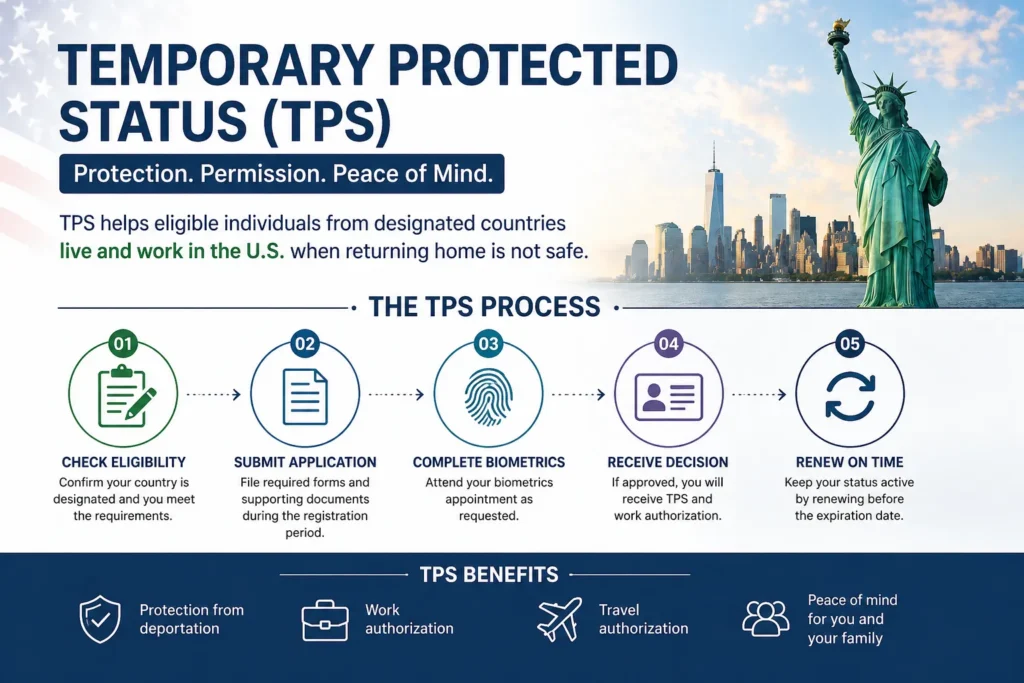
The process of tps might sound complicated at first, but it’s really a series of clear steps.
Step-by-Step
- Forms are filled out
- Documents are collected
- Fees are handled
- Biometrics are completed
That’s the structure. But the experience depends on preparation.
Where Delays Happen
- Missing documents
- Incorrect forms
- High number of applications
This is why TPS processing time can sometimes feel longer than expected.
How to Apply for TPS Without Stress
When people search how to apply for TPS, what they really want is a simple path forward.
What Needs to Be Ready
- Identification documents
- Proof of nationality
- Proof of living in the U.S.
- Immigration records if available
What Makes It Easier
- Applying early
- Staying organized
- Keeping copies
Small habits make the process smoother.
Temporary Protected Status Benefits: What You Get
Let’s keep it clear. What does temporary protected status actually offer?
Main Benefits
- Protection from deportation
- Legal permission to work
- Option to apply for travel authorization
- A period of stability
These temporary protected status benefits are what give people room to breathe.
What It Does Not Do
- It does not guarantee a green card
- It does not last forever
- It requires renewal
TPS Renewal: The Step You Can’t Miss
A lot of people lose protection simply because they overlook TPS renewal.
What Renewal Means
- Filing forms again
- Updating details
- Paying fees
Why It Matters
Deadlines are strict. Missing them can end temporary protected status quickly.
TPS Processing Time: What to Expect
Let’s be real. TPS processing time is not always quick.
General Timeline
| Stage | Time Range |
| Application review | 3–6 months |
| Biometrics | Few weeks |
| Work permit | Several months |
Delays happen. Especially when applications increase or policies change.
Can TPS Lead to a Green Card?
This question comes up a lot. The idea of tps to green card sounds simple, but it’s not direct.
What’s Possible
- Family-based immigration
- Employment-based options
- Legal adjustments in certain cases
But temporary protected status alone does not turn into permanent residency.
Latest TPS Updates You Should Know
Things are always changing. Staying updated on TPS updates is important.
What’s Happing Now
- More frequent reviews
- Legal challenges affecting decisions
- Changes in country eligibility
Again, the haiti tps lawsuit shows how quickly things can shift.
Common Mistakes That Cause Problems
This is where many people run into trouble.
Mistakes to Avoid
- Waiting too long to apply
- Sending incomplete applications
- Missing renewal deadlines
- Not checking status updates
Each of these can affect temporary protected status in a serious way.
Conclusion:
Temporary protected status is not about forever. It’s about right now. It gives safety, time, and the ability to move forward without fear.
For many people, that’s enough to rebuild, plan, and figure out the next step.
Frequently Asked Questions
What is temporary protected status in simple terms?
Temporary protected status allows people from unsafe countries to stay legally in the U.S. for a limited time when returning home is not safe due to war or disasters.
Who qualifies for TPS in 2026?
Anyone who meets TPS eligibility requirements, including nationality, residence, and legal conditions, may qualify if all criteria are fulfilled properly.
How long does TPS last?
TPS usually lasts several months and may be extended depending on the conditions in the home country and government decisions.
Can TPS holders work legally?
Yes, individuals with temporary protected status can apply for work authorization and legally work during their protected stay.
Does TPS lead to a green card?
The tps to green card path is not direct, but other immigration options like family or employment sponsorship may still be available.
How long does TPS processing take?
TPS processing time varies, but it often takes several months depending on application accuracy and current demand levels.
What happens if TPS is not renewed?
If TPS renewal is missed, protection may end, and the individual could face immigration consequences depending on their status.
Can TPS holders travel outside the U.S.?
Travel is possible with approval, but leaving without permission can result in losing temporary protected status benefits.
What documents are needed for TPS?
Applicants need proof of identity, nationality, and residence to complete the process of tps correctly.
Are TPS rules changing in 2026?
Yes, TPS updates are ongoing, and rules may change based on global events, legal cases, and government decisions.