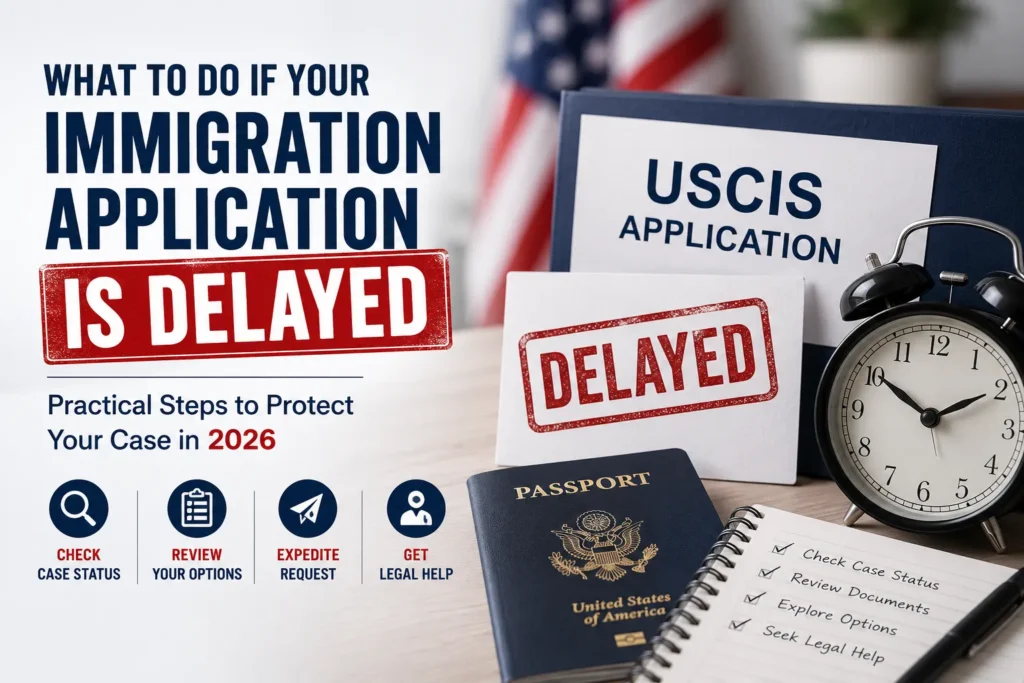
Waiting on an immigration decision? Man, it can feel like you’re standing in a line that just won’t move. One day you see progress. The next day? Nothing. Weeks turn into months. Months turn into a year. Sometimes longer.
And in 2026, a lot of applicants are asking the same stuff. Why’s this taking so long? Did something go wrong with my case? Should I get a lawyer involved? Is there any way to speed this thing up?
Here’s the reality. Immigration processing is just more complicated now. Way more applications. Security checks. Not enough staff. Policy changes. Backlogs piling up. It’s affecting thousands of families every single year.
That’s why understanding USCIS delays matters. It helps you protect your case. And it helps you avoid mistakes that could make your wait even longer..
Why Are Immigration Cases Taking Longer in 2026?
Several factors are contributing to longer processing periods.
Common reasons include:
- Increased application volumes.
- Additional security reviews.
- Requests for evidence.
- Background checks.
- Staffing shortages.
- Policy updates.
- Transfer of cases between offices.
- Technology and system issues.
Many applicants experiencing uscis delays discover that nothing is actually wrong with the application. The case simply remains inside a longer processing queue.
Processing Factors
| Factor | Impact |
| Background checks | Moderate delays |
| Missing documents | Significant delays |
| Office workload | Long delays |
| Requests for evidence | Additional review time |
| Case transfers | Processing interruptions |
Understanding these issues makes it easier to decide whether action is necessary.
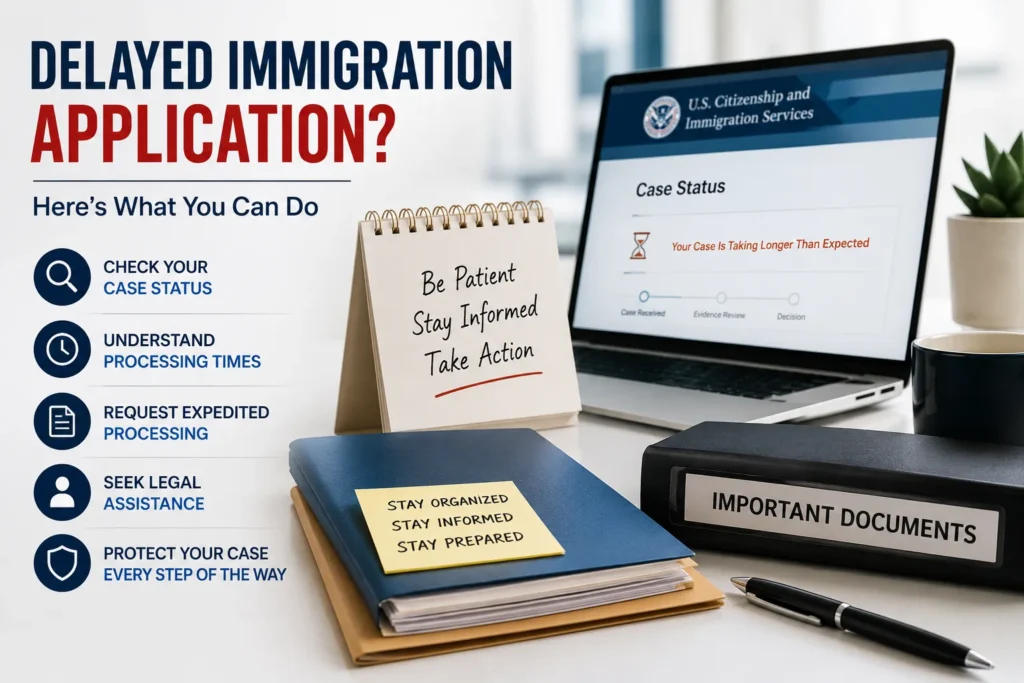
How Can You Check Your USCIS Case Status?
The first step is checking the official case status regularly.
Case updates may include:
- Case received.
- Biometrics scheduled.
- Evidence requested.
- Interview scheduled.
- Decision made.
- Case transferred.
Checking the USCIS case status helps applicants understand where the application currently stands.
However, many applicants dealing with uscis delays see the same message for months. That does not automatically mean the case has been denied.
Important information to review:
- Receipt number.
- Filing date.
- Service center location.
- Estimated green card processing time
- Previous notices.
Keeping copies of every notice can become extremely important later.
Why Is USCIS Taking So Long?
Many people search online asking why processing has slowed down.
The answer often depends on the type of application.
Reasons applications move slowly:
- Employment-based applications.
- Family petitions.
- Adjustment of status cases.
- Naturalization applications.
- Green card renewals.
- Waiver requests.
Some offices process cases faster than others. Certain categories also receive additional scrutiny.
Applicants experiencing uscis delays often compare their timelines with friends or family members, but every case is different.
What Documents Should Be Organized During the Wait?
A delayed application creates uncertainty. That is why organization becomes extremely important.
Keep these records together:
- Filing receipts.
- Copies of forms.
- Passport pages.
- Visa records.
- Previous notices.
- Employment documents.
- Marriage certificates.
- Tax returns.
- Travel records.
Strong documentation can help if further action becomes necessary.
Many immigration attorneys recommend maintaining a complete file because uscis delays sometimes lead to additional document requests.
When Should an Expedite Request Be Considered?
Some applicants qualify for a faster review.
A USCIS expedite request may be possible under certain circumstances when applicants face urgent humanitarian, medical, or financial situations.
Possible reasons include:
- Severe financial loss.
- Humanitarian emergencies.
- Medical situations.
- Government interests.
- Nonprofit organization requests.
- Urgent employment situations.
Evidence is extremely important.
Examples include:
- Medical records.
- Employer letters.
- Financial statements.
- Emergency documentation.
People searching for how to expedite an immigration case should understand that approval is never guaranteed.
Even approved requests may still require additional review.
Signs That Professional Help May Be Necessary
Many delayed cases eventually move forward without intervention.
However, certain warning signs should not be ignored.
Consider legal assistance if:
- The case exceeds normal processing times.
- Multiple inquiries receive no answer.
- Important documents were lost.
- A request for evidence is confusing.
- Interviews have been repeatedly canceled.
- The application contains errors.
An immigration lawyer for delayed cases can review the situation and determine whether additional action is necessary.
Long-term uscis delays sometimes require professional guidance, especially when the delay becomes excessive.
How to Submit a Service Request
Applicants can contact USCIS if their case falls outside normal processing times.
Steps often include:
- Check official processing times.
- Confirm eligibility for an inquiry.
- Submit a service request.
- Save confirmation numbers.
- Monitor responses.
Many applicants receive answers within several weeks.
Some responses simply confirm ongoing uscis delays, while others provide useful updates.
Can Congressional Assistance Help?
Many people do not realize that elected officials can sometimes help obtain status information.
A congressional office may:
- Contact USCIS.
- Request updates.
- Ask for explanations.
- Monitor responses.
This does not guarantee approval.
However, applicants facing serious uscis delays occasionally receive clarification after congressional inquiries.
Should You File Another Application?
Filing a second application usually creates more problems.
Before refiling, consider:
- Current case status.
- Existing receipt notices.
- Attorney advice.
- Processing times.
- Previous correspondence.
Duplicate filings may create confusion and additional costs.
Applicants experiencing uscis delays should carefully review their options before submitting new forms.
Practical Steps to Protect Your Case
Follow these recommendations:
- Respond quickly to notices.
- Update address information.
- Save every document.
- Monitor processing times.
- Keep copies of submissions.
- Track deadlines.
- Prepare for interviews.
- Seek legal advice when necessary.
These actions help reduce risks while waiting.
Many applicants facing uscis delays discover that preparation becomes one of the most valuable tools during long waiting periods.
When Does a Delay Become Excessive?
Every immigration category has different timelines.
Questions to ask:
- Has the case exceeded official estimates?
- Have multiple inquiries failed?
- Is important evidence missing?
- Has the file remained inactive for many months?
Extended uscis delays may justify additional legal action depending on the circumstances.
Understanding available options allows applicants to make informed decisions instead of waiting indefinitely.
Conclusion:
Immigration processing can drive you crazy. Especially when you don’t hear anything for months. No updates. No answers. Just waiting. That brings stress, money worries, and a whole lot of uncertainty about what’s next.
So what do you do? Stay organized. Keep an eye on updates. Have your documents ready. And know what options you got. That’s your best move.
Yeah, USCIS delays are still hitting hard in 2026. No denying that. But if you stay on top of things and act when you need to, you can protect your case and avoid a lot of unnecessary headaches.
Frequently Asked Questions
Why is my immigration case taking so long?
Many immigration applications require security checks, background reviews, document verification, and workload balancing between service centers. Processing times also vary depending on the application category and local office.
How often should the USCIS case status be checked?
Checking once every week is usually sufficient. Daily checks rarely produce new information and may increase unnecessary stress during the waiting period.
Can a USCIS expedite request guarantee faster approval?
No. Expedite requests are reviewed individually and require supporting evidence. Approval only moves the case for additional review and does not guarantee approval.
What documents should be saved during processing?
Applicants should keep receipt notices, application copies, passports, supporting evidence, financial documents, tax records, and all communication received from immigration authorities.
When should an immigration attorney be contacted?
Receipt notices, copies of your applications, passports, supporting evidence, financial papers, tax records, and every single letter or email you get from immigration. Keep it all. Don’t throw anything away.
Can congressional offices help delayed cases?
Congressional offices can sometimes request status updates or explanations from immigration agencies, although they cannot approve applications directly.
Is it dangerous to file another application?
Submitting duplicate applications may create confusion and additional delays. Reviewing the existing case carefully before refiling is usually recommended.
What causes background check delays?
Background checks involve several agencies and verification systems. Travel history, name similarities, and additional security reviews may increase processing times.
Does moving to another address affect processing?
Address changes should always be reported quickly. Missing notices because of an outdated address can cause additional delays or missed deadlines.
Can delayed cases still receive approval?
Yes. Many applications that experience lengthy processing periods eventually receive approval once reviews, checks, and internal processing steps are completed.