Advance parole is basically a travel permission given by USCIS that allows someone to leave the United States and come back without breaking a pending immigration case. Advance Parole works like a special travel permission for immigrants who are waiting for a green card or another immigration decision but still need to leave the United States for important personal reasons.
This travel document does not function as a visa or a green card, and approval does not guarantee automatic entry into the country. Permission only allows a person to travel abroad and request re-entry when returning to a U.S. port of entry.
Advance Parole has become especially important in 2026 because immigration processing delays continue across many USCIS applications. Family emergencies, medical situations, business obligations, and urgent personal travel needs still happen while cases remain pending for months or even years. That is where advance parole travel becomes a legal bridge between leaving and returning safely.
What Does Advance Parole Really Mean?
Advance parole simply means permission to leave the U.S. for a short time and come back without losing immigration progress.
This permission comes as an official document, issued by USCIS after approval.
Most people apply using immigration form i-131, and the way this is handled depends on following form i 131 instructions properly.
It is not freedom to travel anytime. It is controlled permission with strict conditions, and everything depends on approval from USCIS processing.
Who Can Apply for Advance Parole
Advance parole is only for people already inside an immigration process. It is not for general tourists or casual travel.
Usually, it includes:
- People waiting for green card approval
- DACA holders under daca
- Humanitarian or emergency travel cases
- Certain asylum or pending immigration relief cases
The eligibility depends on USCIS review, and every case is checked carefully before approval.
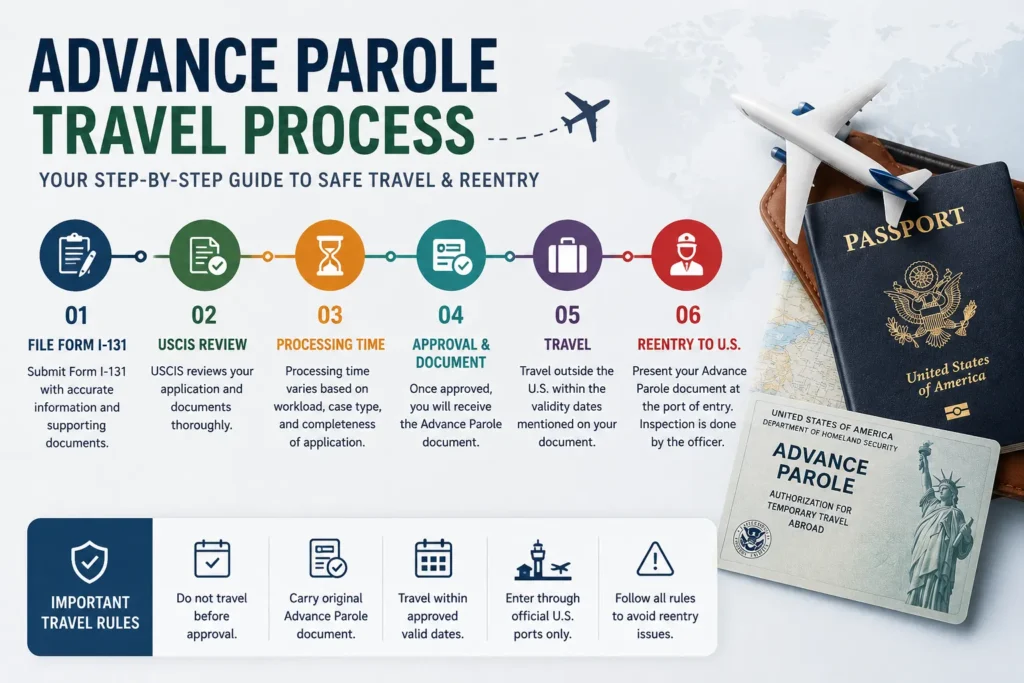
How Advance Parole Travel Works Step by Step
The travel starts with a simple form but goes through strict review.
Here is how it usually happens:
- Fill out immigration form i-131
- Follow form i 131 instructions carefully without mistakes
- Submit documents showing immigration status
- Explain travel reason clearly
- Wait for USCIS review
Once approved, an advance parole document is issued. That document becomes the key for travel.
Without that approval, travel is not allowed at all.
Advance Parole Processing Time Explained
The advance parole processing time is one of the most important concerns because people often need to travel urgently.
In real situations:
- Standard cases can take weeks or months
- Some cases depend on USCIS workload
- Emergency cases may be faster with proof
But processing time is never fixed. It changes based on demand, case type, and document accuracy.
That is why booking travel before approval is risky and not recommended.
Emergency Advance Parole for Urgent Situations
Sometimes travel cannot wait, and that is where emergency parole is used.
It can be urgently requested when:
- A close family member is seriously ill
- There is a death in the family
- Emergency medical treatment is required abroad
In these cases, strong proof is required. Documents like hospital reports, doctor letters, or death certificates are usually needed.
Even an emergency still requires approval before travel. There is no exception to that rule.
Advance Parole Travel Rules You Must Follow
Advance parole travel rules are strict because immigration law is strict.
Here is what always applies:
- Never travel before approval
- Always carry the original advance parole document
- Follow approved travel dates only
- Enter through official U.S. ports
The travel rules must be followed carefully because mistakes can affect reentry and future immigration outcomes.
Advance Parole Re-entry Process Explained
Re-entry is the process of coming back into the United States after travel.
When returning:
- Officers check the document
- Questions may be asked about travel
- Identity and immigration status are verified
- Final entry decision is made at the airport
Even with approved, entry is not guaranteed. The officer at the border makes the final decision.
That is why advance parole reentry should always be taken seriously.
Advance parole for DACA Holders
Advance parole daca is a special category that allows eligible DACA recipients to travel for limited reasons.
It is usually used for:
- Education opportunities abroad
- Work-related travel
- Humanitarian or family emergencies
It must always be approved before travel. Without approval, leaving the U.S. can lead to serious immigration consequences.
Common Mistakes in Travel
Many issues happen because of avoidable mistakes in a travel planning.
Common mistakes include:
- Incorrect immigration form i-131 submission
- Not following advance parole travel rules
- Misunderstanding parole processing time
- Traveling before approval
- Staying outside the U.S. longer than allowed
These mistakes can affect advance parole reentry and future immigration progress.
Why Advance Parole Matters So Much in 2026
It matters because immigration cases take time, but life does not pause.
People still need to handle:
- Family emergencies
- Medical situations
- Work and education travel
- Humanitarian needs
Advance parole gives a legal way to manage travel without breaking immigration status.
Conclusion
Advance parole is a controlled travel permission issued by USCIS that allows temporary travel outside the United States and return after inspection. Approval depends on proper documentation, accurate information, and full compliance with immigration travel rules throughout the entire process.
Every stage requires careful attention because factors such as immigration Form I-131 filing, supporting evidence, USCIS processing time, and final border inspection can directly affect reentry results.
Safe travel under Advance Parole becomes more likely when applicants follow all USCIS requirements correctly and avoid mistakes from the beginning of the process until returning to the United States.
Frequently Asked Questions
What is advance parole?
It is permission from USCIS that allows a person with a pending immigration case to leave the United States temporarily and return after approval and inspection.
How long does processing time usually take?
The processing time usually takes weeks to months depending on USCIS workload, case type, and how correctly immigration form i-131 is submitted.
What is immigration form i-131 used for?
Immigration form i-131 is used to apply for travel permission, allowing eligible individuals to request temporary travel outside the U.S.
Can someone travel without advance parole approval?
No, traveling without approval is not allowed and can create serious immigration problems, including issues with reentry.
What is emergency advance used for?
Emergency advance parole is used for urgent travel situations like family death, serious illness, or emergency medical treatment abroad.
Does advance guarantee re-entry into the U.S.?
It does not guarantee entry. Final parole reentry decision is always made by border officers after inspection.
Who can apply for parole daca?
Advance parole daca is available for eligible DACA recipients traveling for education, work, or humanitarian reasons with prior approval.
What documents are needed for advance travel?
Usually an approved document, passport, identification, and supporting proof of travel purpose are required.
What are common advance travel rules mistakes?
Common mistakes include filing incorrect immigration form i-131, misunderstanding rules, or not respecting approved travel limits.
Can parole be used again after it expires?
Yes, advance parole can be applied for again, but each request requires new USCIS review and approval under USCIS rules.