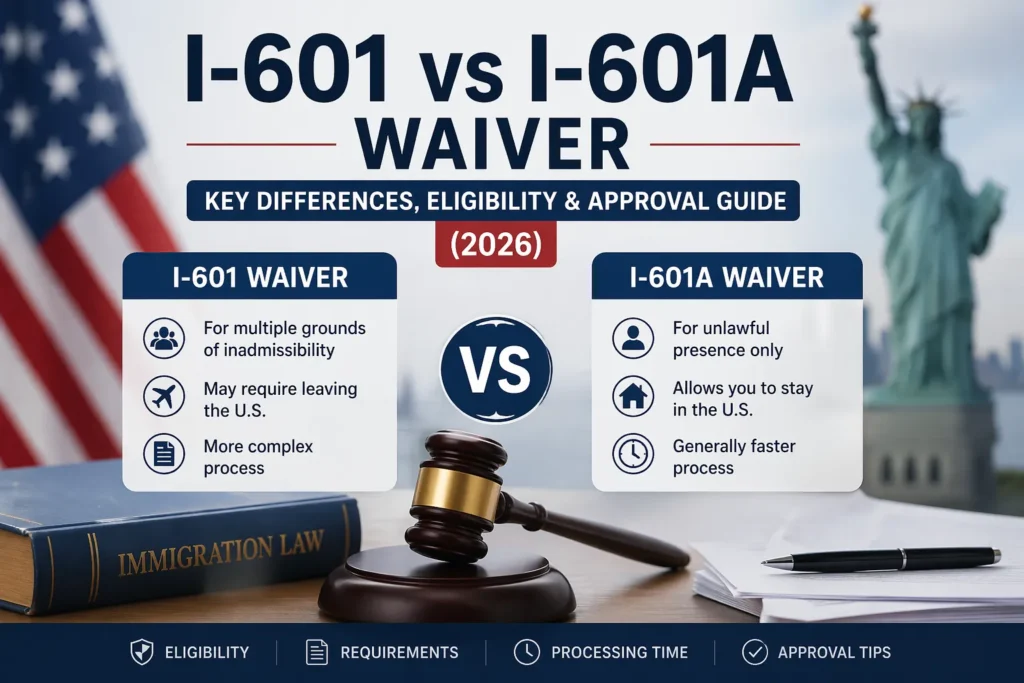
You know, the I-601 waiver in immigration? It’s one of those game-changers that can totally turn a case around. Picture this: someone’s hit with inadmissibility to the U.S.—maybe some past slip-up. This waiver? It’s like knocking on the door of immigration folks, saying, “Hey, please forgive this and let us keep going.”
What immigration i 601 waiver really means
immigration i 601 waiver is used when immigration law says someone cannot enter or stay in the U.S. due to past problems. Instead of automatically refusing the case, the government allows a second chance through this waiver.
It usually comes into play when:
- Someone stayed in the U.S. without legal permission
- There was a mistake or misrepresentation in a visa case
- A previous immigration violation exists
- A deportation or removal order is part of the record
When approved, the immigration i 601 waiver removes that barrier and allows the immigration process to continue.
I-601 vs I-601A explained in simple way
This is where most confusion happens, so it’s better to keep it very clear.
The I-601 waiver is the broader one. The I-601A is more limited.
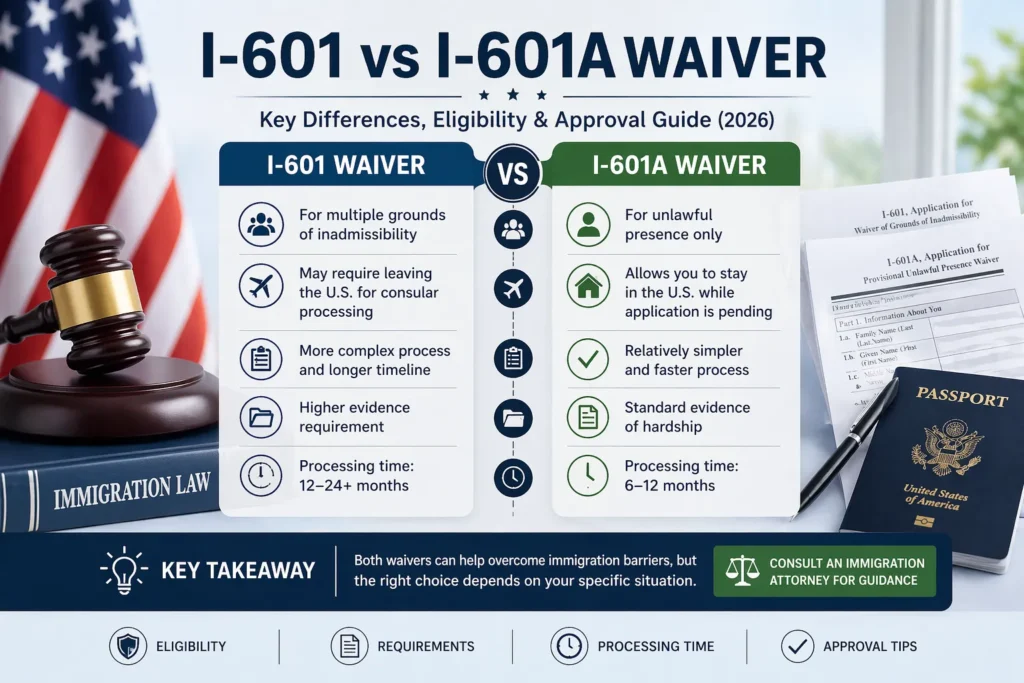
- I-601 covers multiple immigration problems
- I-601A only deals with unlawful presence
- I-601 may require leaving the U.S.
- I-601A allows staying inside the U.S. while waiting
So when people talk about immigration i 601 waiver, they are usually referring to the more complete and serious version of the process.
Who actually qualifies for immigration i-601 waiver
Not everyone can apply. It is not automatic, and eligibility is checked carefully.
Usually, approval depends on:
- Having a close family member in the U.S. like a spouse, parent, or child
- Showing that this family member will suffer serious hardship
- Providing real proof of emotional, financial, or medical impact
- Clearly explaining immigration history without confusion
The whole immigration i 601 waiver case is built around one main idea: proving hardship in a very strong way.
What “extreme hardship” really means
This is the heart of the case, and it is where everything is decided.
Extreme hardship is not just normal difficulty. It means real serious impact like:
- A spouse struggling financially without support
- A parent dealing with medical issues without care
- Children facing emotional or educational disruption
- Family separation causing long-term psychological stress
Immigration officers focus heavily on this part of the immigration i 601 waiver because it decides approval or denial.
Why many cases get rejected
A lot of people qualify but still get denied. That usually happens because the case is not strong enough.
Common problems include:
- Weak explanation of hardship
- Missing supporting documents
- No proper financial or medical proof
- Incomplete or unclear application
- Story not consistent across documents
A strong immigration i 601 waiver always feels complete, organized, and clearly supported with evidence.
Filing Fee and Cost Reality
There is always a government fee set by USCIS, and it can change over time.
Typical cost breakdown:
- USCIS filing fee for Form I-601
- Optional attorney fee if legal help is used
- Translation of documents if needed
- Medical reports or expert evaluations in complex cases
Even though cost matters, what really matters in immigration i 601 waiver is the strength of the case, not just how much is paid.
How long the Process Usually Takes
Processing time is not fixed because every case is different.
General timeline looks like:
- Simple cases: around 6 to 12 months
- More complex cases: 12 to 24 months
- Cases with extra requests: even longer
Each immigration i 601 waiver moves based on how complete and clear the submission is.
Step-by-Step Process Explained Simply
Step 1 – Checking Eligibility
First thing is confirming if inadmissibility exists and whether there is a qualifying relative.
Step 2 – Collecting Strong Evidence
This includes financial records, medical documents, and anything showing hardship clearly.
Step 3 – Filling the Form
Form I-601 must be filled carefully, because small mistakes can delay everything.
Step 4 – Submitting Application
The full package is sent to USCIS with required fee and documents.
Step 5 – Waiting for Decision
USCIS reviews everything and may ask for more proof before making a final decision.
A properly prepared immigration i 601 waiver always has a stronger chance because everything is clear and complete.
Approval Rate Understanding
There is no fixed approval rate that guarantees success.
What really matters is:
- Strength of hardship evidence
- Clarity of documents
- Consistency in explanation
- Overall case presentation
A weak immigration i 601 waiver can fail even if eligibility exists, while a strong one can succeed even in complex situations.
I-601A updates
Recent trends show:
- More careful document checking
- Focus on accurate hardship claims
- Gradual improvement in processing speed
These updates also influence how immigration i 601 waiver cases are reviewed because both processes are connected.
Immigration Lawyer Role in Real Cases
A immigration lawyer is not just for filing papers. They help shape the entire case.
They usually:
- Turn personal situations into strong legal arguments
- Avoid small mistakes that can cause rejection
- Organize documents properly
- Respond to USCIS requests correctly
Many people use legal help for immigration waiver because the process is detailed and one small error can create delays.
Simple Summary of Key Differences
- I-601 is broader and more complex
- I-601A is only for unlawful presence
- One may require leaving the U.S.
- Evidence requirements are different
- Risk level is not the same
Understanding this clearly helps avoid mistakes in immigration i 601 waiver cases.
Final important points before applying
- Strong evidence is everything
- Hardship must feel real and serious
- Forms must be complete and accurate
- Processing takes patience
- Every case is reviewed separately
A successful immigration i 601 waiver is not about luck, it is about preparation and clarity.
Frequently Asked Questions
How long does immigration i 601 waiver take?
It usually takes between 6 and 24 months depending on case complexity and whether USCIS asks for more documents during review.
What is the main reason for denial?
Most denials happen because applicants fail to prove extreme hardship with strong and detailed supporting evidence.
Is immigration i 601 waiver guaranteed?
No approval is not guaranteed. Each case is reviewed separately based on evidence strength and overall presentation.
What is the difference between I-601 and I-601A?
I-601 covers multiple immigration issues and may require leaving the U.S., while I-601A only covers unlawful presence and allows staying in the U.S.
What is extreme hardship?
It means serious emotional, financial, or medical difficulty that a U.S. family member would face if separation happens.
Can someone apply without a lawyer?
Yes it is possible, but many people prefer legal help because small mistakes can affect the outcome of the case.
What happens after approval?
After approval, the immigration process continues and the applicant can move forward with visa or green card processing.
Does approval solve everything permanently?
No, it only removes a specific immigration barrier in that case. Future applications are still reviewed under immigration law.