So you’re thinking about moving to the United States, or maybe staying longer, and you’ve probably heard people talk about green card vs visa. The truth is, these two are very different, even though lots of people use the words like they mean the same thing. Knowing which one you need can save a lot of headaches. Let’s break it down clearly.
What Exactly is a Green Card?
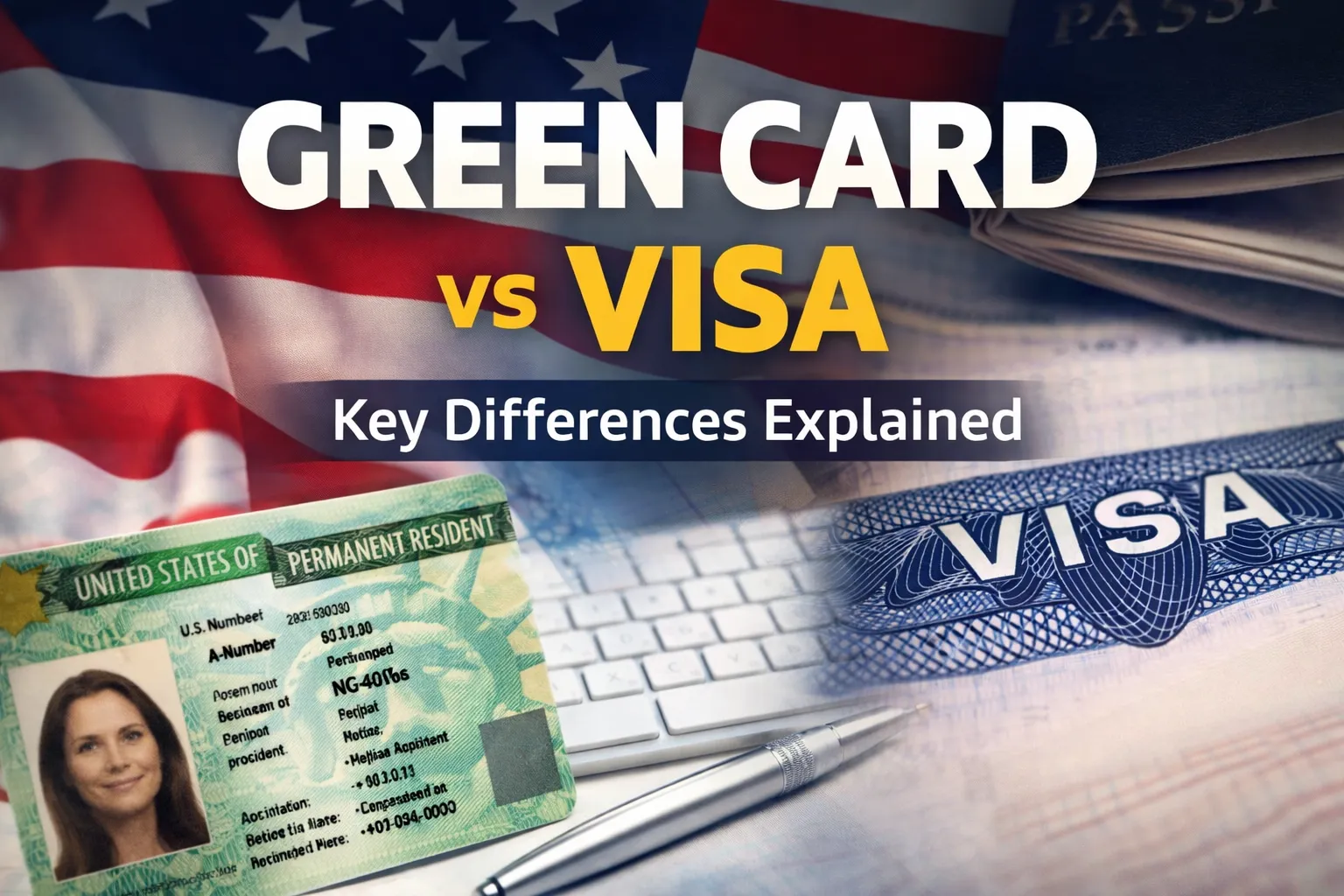
A green card, officially called a U.S. Alien Registration Card, is your proof that you can live in the U.S. permanently. Think of it like your permanent ID to the country.
With a green card, you can:
- Work anywhere in the U.S., for any employer
- Travel in and out of the U.S. with fewer restrictions
- Apply for citizenship after a few years
Basically, if your goal is to make the U.S. your home, the green card is what you want.
And What About a Visa?
A visa is a temporary permission slip to enter the U.S. It tells the government why you’re coming and for how long you can stay.
Some common visa types are:
- Tourist visas
- Student visas
- Work visas like H-1B
- Business visas
Green Card vs Visa: The Key Differences
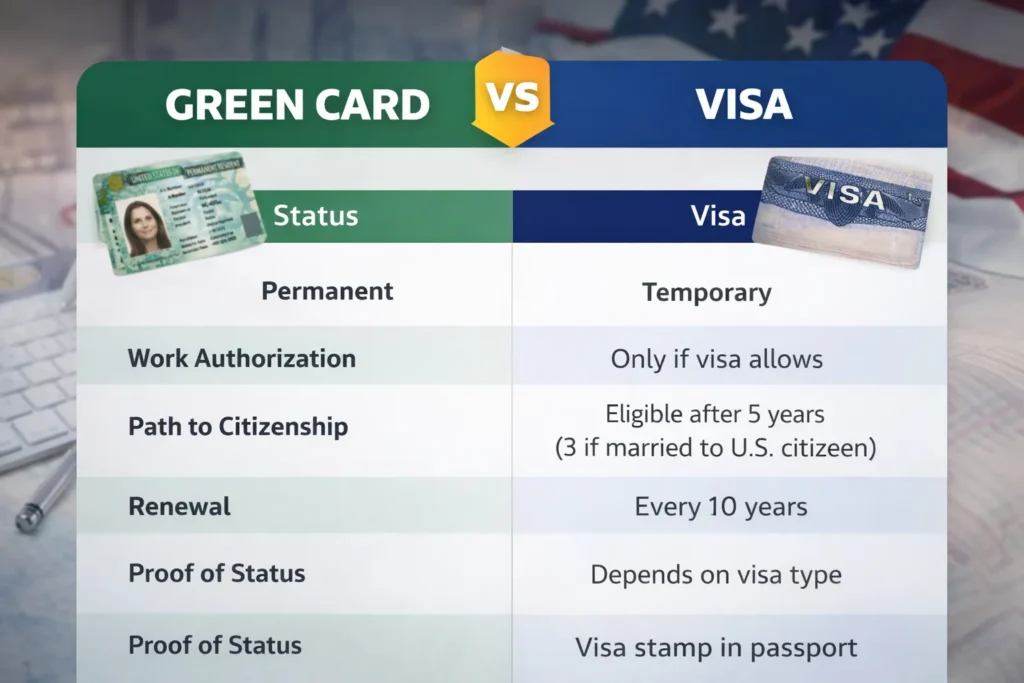
It’s easier to see the difference in a table:
| Feature | Green Card | Visa |
| Status | Permanent | Temporary |
| Work Authorization | Yes, any employer | Only if visa allows |
| Travel | Easier, re-entry allowed | Depends on visa validity |
| Path to Citizenship | Eligible after 5 years (3 if married to U.S. citizen) | No |
| Renewal | Every 10 years | Depends on visa type |
| Proof of Status | U.S. Alien Registration Card | Visa stamp in passport |
See that? One gives stability, the other just lets you visit or work for a while.
Types of Green Cards
Not all green cards are the same. There are a few main paths:
- Family-Sponsored – Close relatives of U.S. citizens or green card holders.
- Employment-Based – Employers can sponsor you if they want you long-term.
- Diversity Lottery – Random chance for people from eligible countries.
- Refugees or Asylees – If you were admitted as a refugee or granted asylum.
Each type has its own rules, but the goal is the same: permanent residency.
Types of Visas
Visas also come in different flavors, depending on why you’re coming:
- Nonimmigrant Visas – Short-term stay for travel, school, or work. Example: H-1B.
- Immigrant Visas – These are for people planning to live permanently. Once approved, you get a green card.
It’s easy to see why people mix up immigration visa vs green card. One is temporary, the other is permanent.
How to Apply for a Green Card
Applying for a green card might sound scary, but it’s really about following steps:
- Check if you’re eligible – through family, work, diversity lottery, or asylum.
- File the right petition – Form I-130 for family, I-140 for work.
- Submit the U.S. Green Card Application Form – I-485 if you’re in the U.S., DS-260 if you’re abroad.
- Attend biometrics – fingerprints, photo, and sometimes an interview.
- Wait for approval, then receive your green card.
It can take months or years depending on the category, but it’s the legal path to permanent residency.
Green Card Renewal Process
Green cards last 10 years, so eventually, you’ll need to renew.
- File Form I-90 online or by mail
- Update your information if anything changed
- Pay the renewal fee
- Receive a new card
Keep this up to stay in immigration compliance and avoid trouble.
Visa Extensions and Changes
Visas aren’t permanent. If you’re on a work or student visa:
- Apply for an extension before it expires
- Employers can file extensions for work visas
- If you want permanent residency, apply for a green card before your visa runs out
That’s why understanding green card vs work visa is so important if your goal is staying long-term.
Green Card vs Work Visa
Here’s the simple truth:
- Work visas are temporary and usually tied to one employer
- Green cards give you full freedom to work and live in the U.S. permanently
Some people start with a work visa and later get sponsored for a green card. If your employer is willing, this can be a smooth path.
How to Decide: Green Card or Visa?
Ask yourself:
- Do I want to live in the U.S. permanently?
- Am I eligible through family, work, or lottery?
- Will I need to work for any employer?
- How often will I travel internationally?
Your answers usually make the choice clear.
Staying Compliant
- Keep your green card or visa up to date
- Notify USCIS if you move
- File taxes correctly for your status
- Don’t overstay your visa
- Know what is the visa type for green card if switching
Quick Overview Table: Green Card vs Visa
| Question | Green Card | Visa |
| Can I live permanently? | Yes | No |
| Can I work freely? | Yes | Only if visa allows |
| Can I apply for citizenship? | Yes | No |
| Renewal needed? | Every 10 years | Depends on type |
| Travel restrictions? | Minimal | Depends on visa |
Frequently Asked Questions
Can I work in the U.S. if I only have a visa?
Depends which one you’ve got. Some visas, like a work visa or a student visa, let you work legally. But if it’s just a tourist visa — nope, that one’s for vacation, not for a paycheck.
How long can you stay with a green card?
Pretty much forever, as long as you don’t break any rules and renew it every 10 years.
Do green card holders automatically become U.S. citizens?
You can apply after a few years if you want to, usually five years, or three if you’re married to a U.S. citizen, but it’s totally up to you.
Can I move from a visa to a green card?
Yep, that’s how a lot of people do it. You might get sponsored by your employer, through family, or even win the diversity lottery. It’s called “adjusting your status.”
What happens if my visa expires while I’m still in the U.S.?
Overstaying can cause serious issues like bans or big delays if you ever want to come back. Always renew or extend before it’s too late.
Is the green card lottery actually random?
Only people from certain countries can apply. If you’re eligible, it’s definitely worth a shot.
Do green cards ever expire?
Yeah, every 10 years. It’s like renewing your ID, quick process, just don’t forget about it.
So, should I go for a visa or a green card first?
Usually, start with a visa, it’s faster and simpler. Then once you’re here, if you decide you really want to stay long-term, that’s when the green card makes sense.