Getting a USCIS Request for Evidence can shake anyone’s confidence. That official envelope arrives and suddenly the future feels uncertain. But here is the truth: this notice simply means immigration officers need more information. They have not denied anything yet.
The USCIS Request for Evidence shows up when submitted paperwork has gaps. Maybe something was missing. Maybe the officer found confusing details. Whatever the reason, the agency wants clarification before moving forward. A well-prepared RFE response addresses every concern and keeps the application moving toward approval.
Understanding what is RFE immigration removes unnecessary fear. These requests happen frequently across all application types. Family petitions, work visas, green card cases—all can trigger an evidence request. The notice spells out exactly what is needed and provides a clear deadline for submitting everything.
Why USCIS Sends These Notices
Immigration officers send an evidence request for several reasons. Missing signatures cause problems. Incomplete forms raise flags. Financial documentation often falls short. Medical records might be outdated.
Some cases receive a USCIS Request for Evidence because submitted proof fails to establish eligibility. Marriage cases need convincing relationship evidence. Employment petitions require verified credentials. The officer simply wants stronger documentation before making a decision.
The Deadline Question
Every applicant asks when is the deadline for RFE. The notice gives a clear date. Typically this falls 30 to 90 days from issuance. Missing this cut-off leads to automatic denial.
Too many people rush because the deadline looms. This hurry causes incomplete submissions. A better approach involves reading the notice carefully, gathering everything needed, and sending the RFE response well before the due date.
How to Prepare a Winning RFE Response
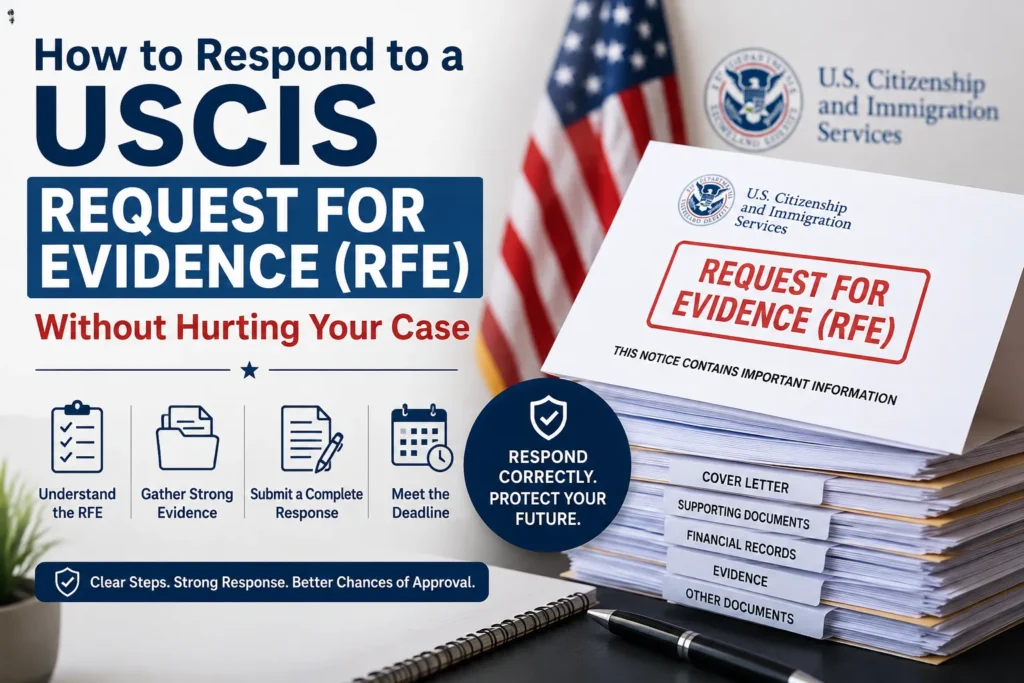
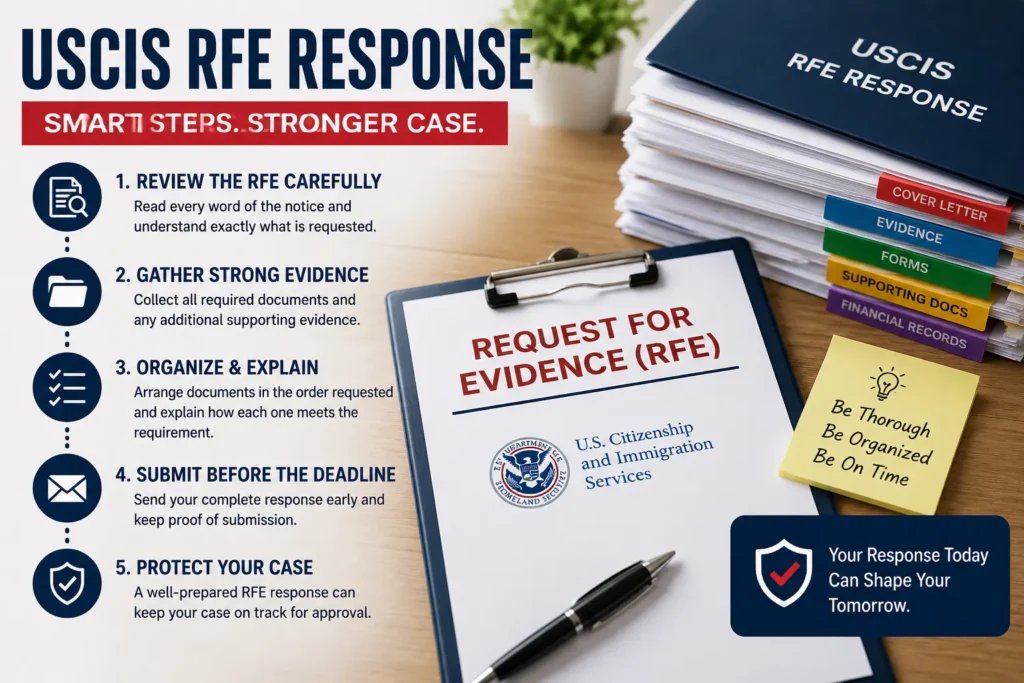
Read the notice carefully: Study every detail in the USCIS Request for Evidence. Note the deadline immediately. Understand each specific concern raised.
Gather the right documents: Collect everything requested. Get certified copies of birth certificates. Make sure financial statements cover the right periods. Follow formatting rules for employment letters.
Organize everything logically: A clean RFE response makes the officer’s job easier. Create a cover letter matching each requested item with evidence. Number documents according to the request order.
Write a clear response letter: Address every point raised. Explain how each document satisfies the requirement. Use straightforward language.
Submit before the deadline: Send the completed RFE response early. Allow time for shipping delays. Keep tracking information and copies of everything sent.
Key Strategies That Work
Double-check everything: Review the entire RFE response before sending. Check every signature. Verify all dates match. Ensure translations have proper certification.
Keep documents in request order: Present your RFE response in the exact order requested. Include a table of contents for easy reference.
Provide complete information: The RFE response must fully cover every item listed. Include all supporting documents, even those previously submitted.
Mistakes That Can Sink Your Case
Major pitfalls to avoid:
- Sending irreplaceable original documents without keeping copies
- Failing to include certified translations
- Overlooking required signatures
- Providing incomplete financial records
- Missing the deadline entirely
Handling Complicated Cases
Some USCIS Request for Evidence notices raise complex issues. Employment cases might demand detailed labor certifications. Family petitions sometimes require extensive relationship proof including photos, travel records, and shared financial accounts.
Complex situations benefit from organized evidence packets. Professional assistance from immigration attorney provides valuable guidance.
Documentation That Strengthens Your Case
Quality evidence makes the RFE response more persuasive. Focus on clear, verifiable materials from trusted sources. Government documents carry the most weight. Third-party verification adds credibility.
Valuable documentation categories:
- Identification documents and birth records
- Financial statements and tax filings
- Employment verification and education records
- Relationship evidence for family cases
- Medical records and health examinations
Life After Submitting Your Response
After sending the RFE response processing times vary. Some applications get decisions in weeks. Others take months. Online tracking helps monitor case status. If the agency needs more information after your response, they might issue another request. This often indicates continued doubts. Addressing everything properly the first time reduces this risk.
Case-Specific Considerations
- Family petitions need substantial relationship proof. Include photos showing shared experiences, joint financial accounts, shared address verification, and affidavits from friends and family.
- Employment cases require detailed job history, education verification, and labor certification documents. Letters from employers should include specific job duties and dates.
- Adjustment of status cases frequently need medical exams, criminal background checks, and financial support documents. Current medical forms and detailed police clearances are typically required.
When to Get Professional Help
Some cases warrant legal assistance. Attorneys craft effective RFE responses. Consider consulting a lawyer when the notice raises serious concerns or involves extensive documentation.
Signs professional help is needed:
- The notice mentions fraud or misrepresentation
- Criminal history appears in the application
- Legal issues require interpretation
- Previous applications received denials
- Gathering evidence feels overwhelming
Conclusion:
When you get a Request for Evidence from USCIS, you gotta take it seriously. Read that notice carefully and send them exactly what they’re asking for organized and complete. That’s how you boost your chances of getting approved.
Double-check everything. Keep copies of whatever you send. And whatever you do, don’t miss that deadline
Frequently Asked Questions
What does a USCIS Request for Evidence notice typically ask for?
The notice asks for specific missing documents like birth certificates, marriage records, tax returns, or employment verification letters with detailed submission instructions.
How much time to respond to a USCIS Request for Evidence?
The deadline ranges from 30 to 90 days from the notice date, and missing it almost always results in denial.
Can extra evidence be sent beyond what was requested?
Yes, additional documents can be included if they directly relate to the issues raised in the notice.
What if the mailed RFE response gets lost?
Tracking information proves timely submission, so use certified mail or private couriers with tracking capabilities.
Does responding to an RFE extend processing time?
Yes, it typically extends overall processing, with most decisions arriving within two to eight weeks after submission.
Which documents should never be sent as originals?
Original passports, birth certificates, and other irreplaceable records should be submitted as certified copies instead.
How to confirm the RFE response was received?
Check shipping tracking, online case status using the receipt number, or wait for confirmation notices from service centers.
What evidence works best for marriage-based RFE requests?
Joint bank statements, shared leases, photographs, jointly filed tax returns, insurance policies, and sworn statements from friends and family.
Why might an employer receive an RFE?
Employers get RFEs when more information is needed about the position, company finances, or employee qualifications.
Can applicants request more time for an RFE response?
Extensions are rarely granted except in exceptional circumstances like medical emergencies.