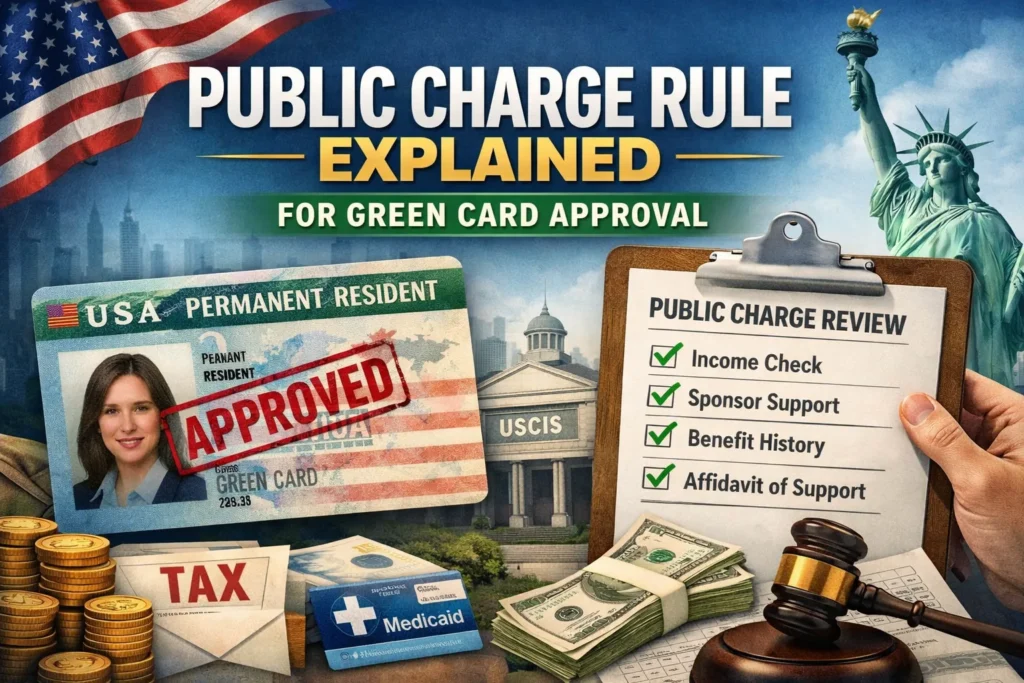
A public change rule is one of the most important checks used in immigration cases, especially when someone applies for a green card application. The public change rule focuses on whether an applicant may depend on government assistance in the future instead of being financially self-supported. The public change rule plays a direct role in deciding how immigration officers evaluate long-term financial responsibility.
What the Public Charge Rule Means in Simple Terms
The public change rule is basically a screening method used during immigration processing to judge financial independence. It is used to understand whether a person is likely to depend on public benefits like housing support or income assistance.
The public change rule does not only look at current income. It looks at long-term ability to support oneself or be supported by a sponsor. This is why documents like employment proof, tax history, and financial statements become very important.
In real cases, the public change rule is applied as part of green card evaluation, especially for family-based immigration applications.
- Income stability is reviewed
- Employment history is checked
- Sponsor financial strength is analyzed
- Health and dependents may be considered
The public change rule helps immigration officers decide whether approval is safe from a financial responsibility point of view.
How Public Charge Rule Impacts Immigration Cases
The public change rule has a direct influence on immigration decisions because it connects financial stability with eligibility. If there is doubt about self-sufficiency, the application may face delays or additional scrutiny.
Under the public change rule, immigration officers look at the overall profile instead of one single factor. A person with low income but strong sponsorship may still qualify, depending on total evaluation.
The public change rule is often discussed because it affects many applicants in family-based green card cases where financial sponsorship is required.
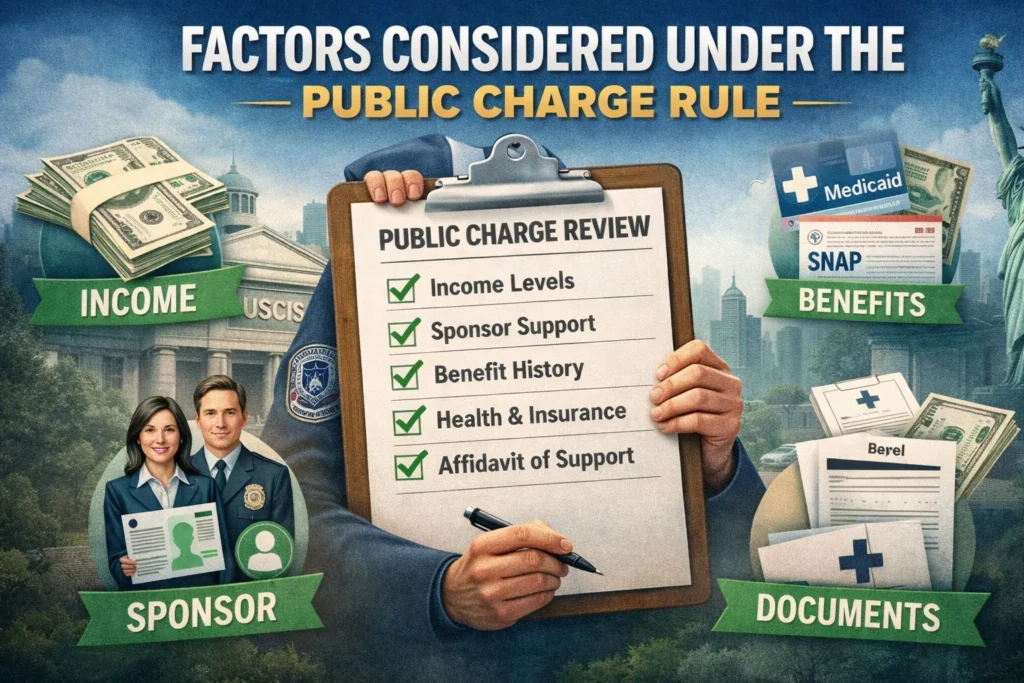
Key factors reviewed include:
- Income compared to federal poverty guidelines
- Strength of sponsor affidavit
- Job skills and education level
- Health conditions and insurance coverage
- Past usage of public benefits
The public change rule does not automatically reject applicants but increases scrutiny when financial risk appears.
Trump Era Changes and Policy Adjustments
The public change rule became stricter during the Trump administration, when more detailed financial checks were introduced. These changes expanded how immigration officers evaluated dependency risk.
Under those trump public change rule changes, more benefits and financial indicators were included in the assessment process. This made the process more complex for applicants.
The public change rule during that time placed heavier weight on income levels and benefit usage history. Applicants needed stronger documentation to prove independence.
Even though some of these changes were later revised, the public change rule still reflects the idea of financial self-sufficiency as a core requirement.
Important shifts included:
- Broader definition of public benefits
- Stronger income requirements
- Deeper review of sponsor financial capacity
- Increased documentation checks
The public change rule continues to evolve but still keeps financial responsibility at its center.
Does It Affect Green Card Approval
The public change rule plays a major role in green card processing decisions. It is not the only factor, but it can influence approval outcomes significantly.
When applying for a green card, the public change rule helps determine whether an applicant may become dependent on public assistance in the future. If that risk is considered high, the case may require additional evidence.
The public change rule is especially important in family-based petitions where financial sponsorship is required. A weak sponsor or unclear income history can raise concerns.
Situations where the public change rule becomes more important:
- Low or unstable income
- Lack of sponsor support
- Limited work history
- No clear financial documentation
- Dependents with high financial needs
The public change rule evaluates the entire financial picture before making a decision.
How the Rule is Applied in Real Immigration Reviews
The public change rule is applied through a structured review process. Immigration officers do not rely on guesswork but use documentation and eligibility criteria.
Each application under the public change rule is reviewed individually. This means two applicants in similar situations may still receive different outcomes depending on overall evidence.
The public change rule typically examines:
- Income sources and consistency
- Sponsor affidavit strength
- Age and employability
- Education and skill level
- Health insurance and medical needs
The public change rule is designed to identify long-term financial stability rather than short-term conditions.
Latest Updates in Public Charge Rule Policies
The public change rule continues to change based on new immigration guidance and policy updates. Recent updates focus more on simplified evaluation instead of overly complex scoring systems.
The public change rule latest updates show a shift toward clearer interpretation of financial independence without overly broad restrictions.
Applicants are encouraged to stay updated with official immigration guidance because the public change rule can be adjusted based on administrative changes.
Current direction includes:
- Simplified financial evaluation criteria
- Reduced focus on benefit scoring complexity
- More emphasis on core documentation
- Case-by-case review improvement
The public change rule still remains an important part of green card and visa processing.
Conclusion:
The public change rule remains a central part of immigration evaluation, especially in green card applications where financial stability is essential. It is designed to ensure applicants can support themselves or have reliable sponsorship.
Understanding how the public change rule works helps applicants prepare better documentation and reduce delays. It is not about rejection by default but about assessing financial responsibility clearly.
The public change rule continues to evolve, but its main purpose stays the same: evaluating long-term self-sufficiency in immigration decisions.
Frequently Asked Questions
What does the public charge rule actually check during immigration review?
The public charge rule checks whether an immigration applicant is likely to depend on government assistance in the future by reviewing income, sponsorship, employment history, and overall financial stability to ensure long term independence.
Can the public charge rule stop green card approval completely?
The public charge rule can impact green card approval if strong evidence shows high dependency risk, but it does not automatically deny applications because multiple financial and personal factors are considered together.
Why is the public charge rule important for immigration cases?
The public charge rule is important because it helps immigration officers evaluate whether an applicant will be financially self-sufficient or require public support, which is a key factor in long term residency decisions.
What documents are most important under public charge rule review?
Under public charge rule review, income proof, tax returns, employment letters, sponsor affidavit of support, and financial statements are critical because they demonstrate stability and ability to avoid dependency.
Who is most affected by the public charge rule in immigration?
Family based green card applicants are most affected by the public charge rule because they often rely on sponsors, making financial documentation and sponsor strength very important in their evaluation process.
Did Trump changes make the public charge rule stricter?
Trump era changes made the public charge rule stricter by expanding benefit review and increasing income scrutiny, which led to more detailed financial assessments during immigration application processing.
Is using public benefits always a problem under public charge rule?
Using public benefits is not always a problem under the public charge rule because immigration officers look at overall long term dependency risk rather than isolated or short term benefit usage.
What income level is considered safe under public charge rule?
There is no fixed safe income level under public charge rule, but earning above poverty guidelines with consistent employment and strong sponsor support generally improves approval chances significantly.
Can a strong sponsor help under public charge rule?
A strong sponsor can greatly help under public charge rule because financial responsibility can shift partly to the sponsor, improving overall application strength and reducing dependency concerns.
How can applicants reduce risk under public charge rule?
Applicants can reduce risk under public charge rule by maintaining stable income, submitting complete financial documents, securing strong sponsor support, and showing consistent employment history over time.