DACA requirements are what everything comes down to right now. Not headlines, not opinions, not assumptions. Just the actual requirements and how they are being applied today. In 2026, things feel uncertain, but they are not completely unclear. There is still a system in place, still a process being followed, and still a way to stay protected if everything is handled carefully.
People are not just searching for information anymore. They are trying to figure out where they stand. Whether they are still safe. Whether they should renew. Whether anything has changed that could affect them.
That is exactly what needs to be explained properly.
What DACA Looks Like Right Now
DACA is still running, but not with the same stability it once had. Courts are still involved. Decisions are still being challenged. That is why daca news keeps changing and why updates sometimes feel confusing.
But here is the simple reality.
Renewals are still going through. People are still receiving approvals. Work permits are still being issued.
New applications are where things get complicated. They are not fully open in the way people expect. So for most individuals, the focus is not on applying for the first time. It is on maintaining what already exists.
And maintaining that comes back to one thing again: DACA requirements.
Who Qualifies for DACA Today
This question is not going away anytime soon: who qualifies for DACA?
The criteria itself has not been rewritten. It is still based on the original structure.
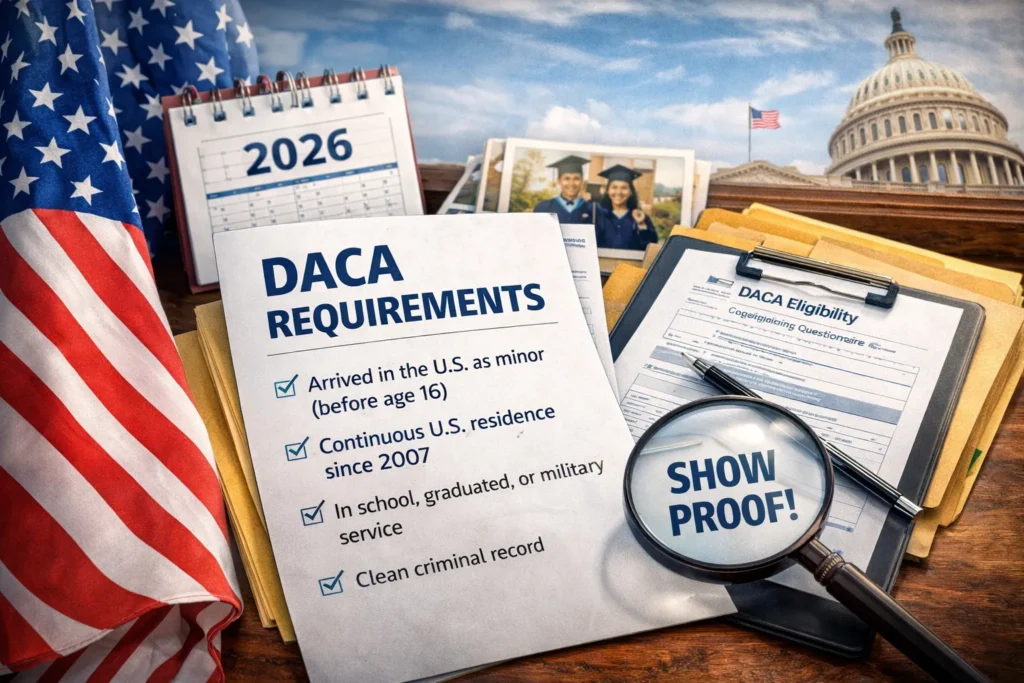
The basic conditions still include:
- Entry into the US before age 16
- Continuous residence since 2007
- Being under 31 as of June 2012
- No legal immigration status at that time
- Being in school, graduated, or military service
- No serious criminal record
On paper, these look straightforward. But in reality, every part of these DACA requirements has to be proven clearly. Not assumed. Not estimated. Proven.
That is where many people struggle.
Understanding DACA Requirements Beyond the Surface
Reading DACA requirements is one thing. Actually meeting them in a way that gets approved is something else.
It is not just about saying continuous residence. It is about showing it.
It is not just about saying no criminal history. It is about having a clean, verifiable record.
It is not just about saying eligible. It is about backing every claim with documents.
What this really means:
- Every year should be supported with records
- Every document should match timelines
- Every gap should be explained
This is where attention matters. Because even if someone technically meets DACA requirements, weak documentation can still cause problems.
DACA Application Requirements in Real Terms
The phrase DACA application requirements sounds formal, but it simply refers to what needs to be submitted.
And this is where things get practical.
What is usually required:
- Proof of identity
- School or education records
- Evidence of arriving before age 16
- Documents showing continuous stay
- Background checks
Nothing here is complicated on its own. But together, they need to tell one clear story that matches the DACA requirements.
If the story does not connect, the application slows down or gets questioned.
The DACA Renewal Process Explained Clearly
The DACA renewal process is where most attention is right now.
This is not something to delay or guess.
The process usually looks like this:
- Apply 120 to 150 days before expiration
- Review all previous information carefully
- Update anything that has changed
- Submit documents and fees
- Wait for processing and approval
It sounds routine, but timing is critical.
If renewal is submitted too late and status expires, protection can be lost. Even if all DACA requirements are met, timing mistakes create unnecessary risk.
What Is Actually Changing in 2026
There is a lot of noise around changes, but not everything is shifting at once.
Here is what is actually happening:
- Courts are still reviewing DACA
- Renewals are still active
- First-time applications are still limited
- Policy direction depends on future decisions
This is why following latest DACA news matters, not for stress, but for staying informed.
And through all these changes, the base standard has not moved. It is still the same DACA requirements guiding everything.
Immigration Reform and What Could Happen Next
There is ongoing discussion around immigration reform DACA, but nothing final has been passed yet.
The conversations include:
- Creating a path to permanent residency
- Expanding eligibility
- Turning DACA into a permanent law
If that happens, it changes everything. But until then, the current system continues to rely on existing DACA requirements.
When Legal Help Becomes Important
Some situations are simple. Others are not.
That is where an immigration lawyer for DACA becomes important.
It makes sense to get help when:
- There is any criminal record
- Documents are missing or unclear
- A previous application was denied
- There are gaps in residence history
Legal guidance helps make sure DACA requirements are not just met, but properly presented.
Mistakes That Keep Happening
A lot of issues are avoidable, but they still happen often.
The most common ones include:
- Waiting too long to renew
- Sending incomplete documents
- Not following updated daca news
- Misunderstanding DACA requirements
- Ignoring small inconsistencies
These mistakes seem small, but they can delay or even block approval.
Quick Reality Check Table
| Area | What It Looks Like Now |
| New Applications | Restricted |
| Renewals | Ongoing |
| Work Authorization | Active with renewal |
| Legal Status | Under review |
| Key Focus | Meeting DACA requirements |
Why Everything Still Comes Back to DACA Requirements
At the end of the day, everything connects back to DACA requirements.
They decide:
- Who stays protected
- Who gets approved for renewal
- Who can work legally
- Who faces uncertainty
Even with legal challenges and policy discussions, these requirements are still the core of the system.
Understanding them clearly, preparing documents properly, and staying updated is what makes the difference.
Frequently Asked Questions
What are the DACA requirements in 2026?
They include arriving in the US super early, staying here without big gaps, either being in school or working, and yeah, keeping that criminal record spotless. But let me tell you—approvals come down to nailing your documentation and watching those current legal decisions like a hawk.
Who qualifies for DACA right now?
Well, if you’re hitting every single eligibility condition, you might be in. Thing is, new applications are limited big time, and approvals are mostly locked in on renewals under the rules we already have.
Is the DACA renewal process still available?
In 2026, DACA renewals are totally active. It’s really the main lifeline keeping folks’ protection and work authorization alive and kicking.
Can someone apply for DACA for the first time?
Those court rulings have new apps restricted tight. Even if you meet all the DACA requirements, first-time approvals? They’re uncertain as heck right now.
What are the DACA application requirements?
Alright, breaking down the DACA application requirements: think proof of your identity, school records to show your path, and solid evidence of where you’ve resided—all gotta match up perfectly with the eligibility criteria, no ifs or buts.
Is DACA ending soon?
Nah, no confirmed end, but check the latest DACA news—it’s all ongoing legal reviews that keep the future feeling shaky and uncertain, doesn’t it?
Do I need an immigration lawyer for DACA?
It’s super helpful in those messy cases, like when documentation’s iffy or legal stuff could derail your approval chances.
What happens if DACA expires before renewal?
Protection and work authorization vanish, even if you meet every DACA requirement. That’s why I always say, renew early and stay safe.
How does immigration reform impact DACA?
Down the line, reform pushes might deliver permanent solutions, but right now? The program’s holding steady under temporary rules, hanging in there.
Is renewing DACA still worth it?
Totally yes—meet those DACA requirements, renew on time, and you hold onto your protection and work authorization, uncertainty be damned.